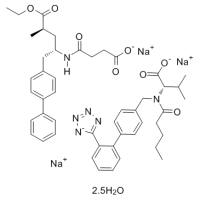
Appearance: White to off white powder; This product is easily soluble in methanol; Almost insoluble in water or acetonitrile; Specific rotation: -40.0 °~-42.0 ° (methanol); Chloride: not exceeding 0.1%; Regarding substances: The maximum single impurity shall not exceed 0.1%; The total magazine shall not exceed 1.0%; Moisture content: should be 4.0% to 5.9%; Heavy metals: not exceeding 10ppm; Content: should be between 97.0% and 102.0%.
Mechanism of action: By simultaneously blocking angiotensin II receptors (inhibiting overactivation of the RAAS system) and inhibiting enkephalinase degradation (enhancing the protective effect of the natriuretic peptide system), dual regulation of the neuroendocrine system is achieved. This mechanism breaks through the traditional single target drug treatment mode and is considered an important breakthrough in the field of heart failure treatment in the past decade.
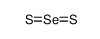
Appearance: This product is an orange yellow to orange red powder; Slightly hydrogen sulfide has a strong odor. Solubility: This product is almost insoluble in water or organic solvents. Soluble selenides: not exceeding 0.0005%. Burning residue: not exceeding 0.2%. Content: The selenium (Se) content of this product should be between 52.0% and 55.5%.
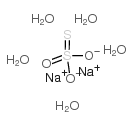
Appearance: This product is colorless, transparent crystalline or crystalline fine particles; Odorless; It is weathered in dry air and deliquescent in humid air; Weak alkaline reaction in aqueous solution; Solubility: Highly soluble in water, insoluble in ethanol; PH: 6.0-8.4; Sulfate and sulfite: not exceeding 0.2%; Sulfide: not exceeding 0.0005% Related substances: The sulfite radical shall not exceed 0.15%, the tetrasulfate radical shall not exceed 0.15%, the maximum single impurity shall not exceed 0.10%, and the total impurity shall not exceed 0.50%; Dry weight loss: 32.0%~37.0%; Calcium salts: turbidity should not occur; Heavy metals: not exceeding 0.002%; Arsenic salt: not exceeding 0.001%; Content: Calculated as dry product, Na2S2O3 content shall not be less than 99.0%.
Solubility:Practically insoluble in water, freely soluble in dimethyl sulfoxide, slightly soluble in methylene chloride.
Specific optical rotation:+ 78.0 to + 84.0 (dried substance).
Unspecified impurities≤ 0.10%
Total≤ 0.30%
Loss on drying:Maximum 0.5 percent
Sulfated ash:Maximum 0.1 percent
Assay:98.5 to 102.0% of the stated amount.
Tadalafil is a selective reversible inhibitor of cyclic guanosine monophosphate (cGMP) – specific phosphodiesterase 5 (PDE5). When sexual stimulation leads to local release of nitric oxide, PDE5 is inhibited by tadalafil, causing an increase in cGMP levels in the penile sponge, which leads to smooth muscle relaxation and blood flow into the penile tissue, resulting in erection; If there is no sexual stimulation, the drug may not be able to exert its effect.
Indications: Treatment for erectile dysfunction (ED). Treat the symptoms and signs of erectile dysfunction (ED) combined with benign prostatic hyperplasia (BPH).
Appearance: White or off white crystalline particles; Melting point: should be 128-131 ℃; Specific rotation: should be+37 ° to+42 °; Burning residue: not exceeding 0.1% Dry weight loss: not exceeding 0.5% Heavy metals: not exceeding 20 parts per million Related substances: Single impurities should not exceed 0.1%, and the sum of peak areas of each impurity should not exceed 1.0%; Enantiomer: not exceeding 0.15%; Content: should be between 98.0% and 102.0%.
Appearance: Off white powder Melting point: should be 180-185 ℃ Specific rotation: should be between 15 ° and 19 ° Acidity pH: should be 4.0~5.5 Chloride: not exceeding 0.02% Moisture content: not exceeding 0.5% Burning residue: not exceeding 0.1% Heavy metals: not exceeding 20 parts per million Related substances: Single impurities shall not exceed 0.1%; The total impurities shall not exceed 1.0%; Enantiomer: not exceeding 0.5% Succinic acid: should be 24.1% to 25.6% Sulfate: not exceeding 0.02% Fluorine content: should be 3.6% to 4.2% Content: not less than 98.5%.
Trelagliptin is a weekly dipeptidyl peptidase IV (DPP-4) inhibitor that controls blood glucose levels by selectively and persistently inhibiting DPP-4. DPP-4 is an enzyme that can inactivate intestinal insulinotropic proteins (glucagon like peptide-1 (GLP-1) and glucose dependent insulinotropic polypeptide (GIP)), both of which play important roles in blood glucose regulation. Inhibiting DPP-4 can increase blood glucose level dependent insulin secretion, thereby controlling blood glucose levels.
Appearance: Light yellow to dark yellow powder; Regarding substances: The maximum single impurity shall not exceed 0.1%; The total magazine shall not exceed 1.0%; Dry weight loss: not exceeding 0.5%; Chloride: not exceeding 0.1%; Burning residue: not exceeding 0.1%; Heavy metals: not exceeding 20ppm; Content: should be between 98.0% and 102.0%.
ASSAY(USP):97.0%–102.0% on the anhydrous basis for the amorphous form or on the anhydrous and isopropyl alcohol-free basis for the crystalline form.
Mechanism of action Warfarin is a derivative of coumarin, with a chemical structure of 3- (a-phenylacetone) -4-hydroxycoumarin. There is no anticoagulant effect inside the test tube, that is, it does not participate in in in vitro anticoagulation. It mainly inhibits the synthesis of vitamin K-dependent coagulation factors II, VII, IX, and X in liver microparticles, but the effect occurs slowly, with the maximum effect occurring within 3-5 days. Vitamin K can promote the carboxylation of amino terminal glutamic acid of vitamin K-dependent coagulation factors II, VII, IX, and X into gamma carboxyglutamic acid. Carboxylation can promote the binding of vitamin K-dependent coagulation factors to phospholipid surfaces, thus accelerating blood clotting. Gamma carboxylation requires the participation of reduced vitamin K (vitamin KH2). Dicoumarin inhibits the activity of vitamin K epoxide reductase, thereby blocking the production of vitamin KH2 and inhibiting the gamma carboxylation of vitamin K-dependent coagulation factors. In addition, vitamin K antagonists can inhibit the carboxylation of anticoagulant proteins C and S.